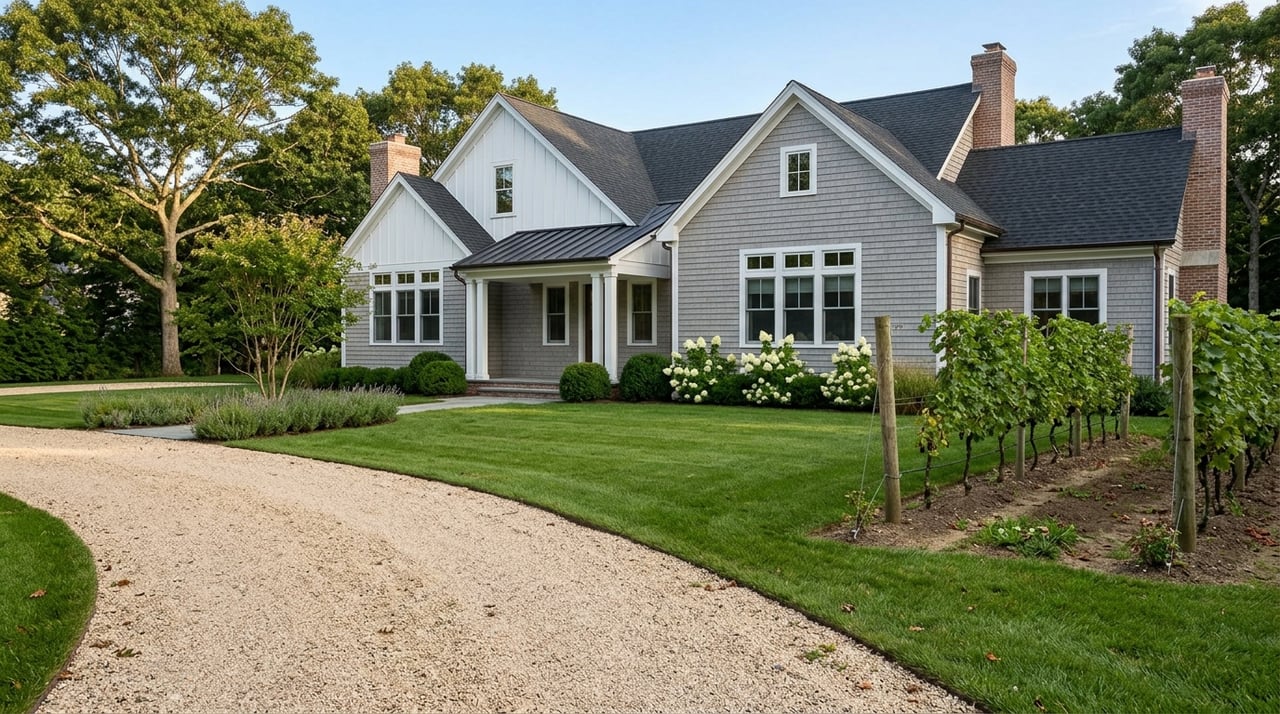
Sagaponack Beach And Farmland Lifestyle Overview
June 25, 2026
June 25, 2026
If you are drawn to the Hamptons but want something quieter, more private, and more rooted in the landscape, Sagaponack stands apart. This is a place where ocean beaches, working farmland, and open views shape daily life more than shops or busy village blocks. If you are considering buying or selling here, it helps to understand what makes the village feel so distinct. Let’s take a closer look.
Sagaponack is an incorporated village in the Town of Southampton in Suffolk County on Long Island’s South Fork, positioned between Bridgehampton and Wainscott. Village materials describe it as a quiet rural community with a long history, rich agricultural soils, ocean beaches, and a quaint Main Street.
The village is relatively small at roughly 4.4 to 4.56 square miles. Official village documents also point to a modest year-round population, with seasonal residents adding to activity at certain times of year. That small scale plays a major role in how Sagaponack feels when you are there.
Sagaponack is best understood as a landscape-first village. Local planning documents describe land use as predominantly single-family residential, with agriculture as the main non-residential use and only a very limited number of public or commercial facilities.
That matters because the setting does not compete with the lifestyle. Instead, the fields, shoreline, and preserved open areas are the lifestyle. For many buyers, that translates to a sense of privacy, space, and calm that can be harder to find in more built-up Hamptons destinations.
Village planning materials note that preserved open space and agriculture are central to Sagaponack’s land use pattern. Zoning is also described as favoring the preservation of rural character and open space.
In practical terms, you notice that in the views, the roadways, and the spacing between properties. The result is a village that often feels understated and protected, with the natural setting doing much of the work.
Sagaponack has very few public and commercial structures. Village documents specifically call out Village Hall, the post office on Sagg Main Street, the one-room Sagaponack School, and the comfort station at Main Beach.
That limited footprint helps explain why Sagaponack feels more estate-like than town-center-driven. If you prefer a setting where the built environment stays in the background, that is a major part of the appeal.
For many people, the word Sagaponack immediately brings the beach to mind. Sagg Main Beach is the village’s key ocean beach, and it plays an important role in the local rhythm of the warmer months.
Southampton Town lists Sagg Main Beach within its beach parking permit system. The town also states that permits are for parking only, which means visitors may still be dropped off, bike in, or walk onto the beach without charge.
Because town beaches operate seasonally and weather permitting, beach access tends to feel structured rather than overly car-heavy. That organization helps preserve the experience many people are looking for when they spend time near the ocean here.
In Sagaponack, the beach is not just a scenic edge to the village. It is part of the everyday identity of the place, tied closely to the dunes, nearby ponds, and the broader coastal environment.
Village planning documents describe Sagg Pond as an estuary, with water levels managed by the Southampton Town Trustees through the barrier beach separating the pond from the Atlantic Ocean. That detail gives useful context to the way beach, pond, and surrounding land interact.
When you spend time in Sagaponack, those connections are visible in the landscape. The shoreline experience feels tied to the larger natural system, not isolated from it.
One of Sagaponack’s defining features is that farmland is still an active part of the village character. This is not just open land for appearance. Conservation and agriculture remain important parts of the setting.
Village documents describe agriculture and preserved land as central components of local land use. That gives the area a lasting visual identity and supports the wide-open, low-density feel many buyers value.
Wölffer Estate Vineyard offers one of the clearest examples of Sagaponack’s working landscape. The winery describes its Sagaponack vineyard as 55 acres and sustainably farmed, with sweeping vineyard views from the tasting room.
Because the tasting room is open year-round, seven days a week, it contributes to local life beyond the summer season. For residents and second-home owners, that helps create a sense of continuity rather than a purely seasonal experience.
Protected agricultural land also reinforces the village’s identity. Research on local conservation efforts notes that farmland parcels in Sagaponack have been preserved, including the Hopping Farmland tract that is home to Pike Farm Stand.
That context matters if you are thinking about long-term value and setting. It shows that the farm character many people associate with Sagaponack is connected to real land preservation and active agricultural use.
Sagaponack’s appeal is not limited to oceanfront time. The area also offers more understated outdoor experiences that fit the same calm and natural tone.
Poxabogue County Park is one example. Suffolk County describes it as a 26-acre passive park with a half-mile trail through grassland, woods, and wetlands, along with a viewing blind overlooking the pond.
That kind of park complements Sagaponack well. It gives you another way to enjoy the landscape without changing the quiet character that defines the village.
For buyers who want access to outdoor space without a louder recreational scene, this is part of the village’s appeal. The options feel simple, scenic, and in step with the setting.
Daily life in Sagaponack tends to feel residential, private, and low-key. Village planning documents describe a small road network, very limited public and commercial facilities, and development rules designed to preserve rural character and open space.
That does not mean isolated. It means the village keeps a lower visual and activity profile, even while remaining part of the broader Southampton area.
Sagaponack also has civic features that reinforce its scale. The Sagaponack School describes itself as one of the few remaining public one-room schoolhouses in the country and serves students from Pre-K through grade 3.
It is a distinctive local institution and a reminder that Sagaponack is, at its core, a small residential village. The identity here comes from community scale and place, not from concentrated commercial activity.
The surrounding Town of Southampton is a seasonal resort region, and summer activity does rise across the wider area. Yet the research points to Sagaponack remaining comparatively discreet thanks to its preserved land, small size, and limited built footprint.
That balance is part of what makes it so appealing. You are near the broader Hamptons lifestyle, but your immediate setting can still feel quiet and protected.
Sagaponack tends to appeal to buyers who value privacy, open views, and a strong connection to the land and shoreline. If you are looking for a village where the setting takes priority over bustle, it can be an excellent fit.
This is especially true if you are drawn to large residential properties, second homes, or a more discreet Hamptons experience. The character here is less about constant activity and more about space, calm, and a refined sense of place.
If you are buying in Sagaponack, understanding the village means looking beyond a map and into how preserved land, beach access, and limited development shape daily living. Lifestyle value here is closely tied to setting.
If you are selling, those same qualities often form the heart of the story. Privacy, agricultural surroundings, proximity to the beach, and the village’s quiet identity are not just features. They are part of what makes Sagaponack real estate so compelling.
When I advise clients in the Hamptons, I always come back to the same principle: the best real estate decisions start with a clear understanding of place. Sagaponack rewards that approach because its value is deeply connected to landscape, preservation, and a very specific way of living.
If you are considering a purchase, a sale, or simply want a clearer view of how Sagaponack fits into the Hamptons market, I’d be glad to help. Request a private consultation or instant home valuation with Geoff Gifkins.
Stay up to date on the latest real estate trends.
Etiam non quam lacus suspendisse faucibus interdum. Orci ac auctor augue mauris augue neque. Bibendum at varius vel pharetra. Viverra orci sagittis eu volutpat.